The Agency Trickle-Down
Agency… that word has been coming up a lot lately in my work.
In the world of Universal Design for Learning (UDL), we talk constantly about student agency—giving learners the choices and reflection time they need to own their outcomes.
But here is the hard truth: we cannot expect students to have agency if their teachers don't.
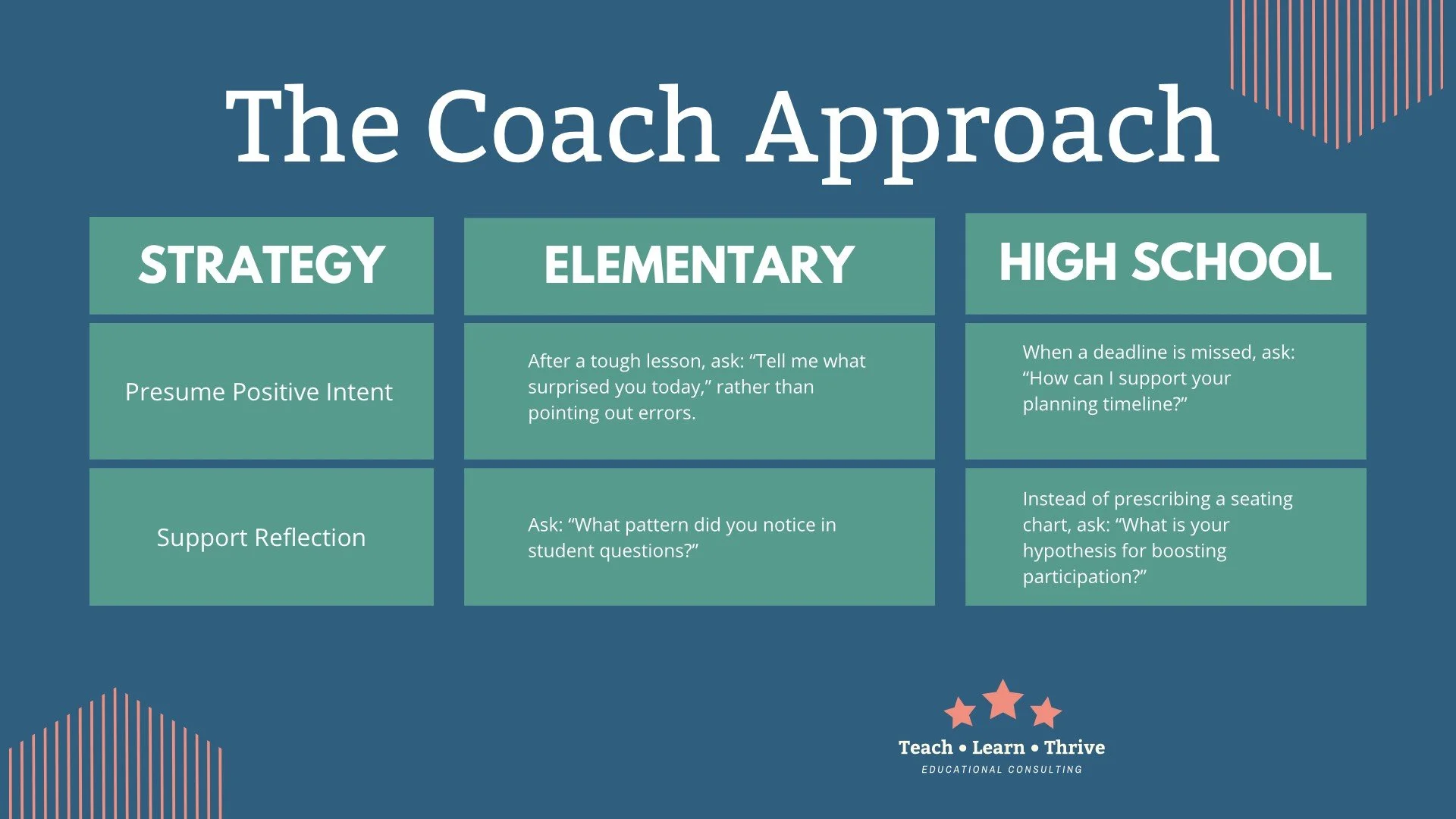
When I facilitate professional development for school leaders, I advocate for the “coach approach.” This shifts the leader's role from a "director" of learning to a "facilitator" of it. In this model, the teacher—not the leader—determines the goal and the path forward, in collaboration with the coach.
The Novice Teacher Myth
A question I hear frequently: “Does this work for brand-new teachers?” There is a common assumption that novice teachers require a "technical support" or directive approach because they are still filling their toolkit.
Jim Knight, the leading pioneer in instructional coaching, argues otherwise in his article, “Are You Coaching or Providing Technical Support?”. Technical support often treats teachers like "empty vessels" to be filled with the leader's wisdom. While this might offer a "quick fix," it rarely lasts. Instead, the coach approach honors the teacher’s professionalism, regardless of their years in the classroom.
3 Ways to Hand Over the Reins
If you want to move from supervision to empowerment, try three of my go-to moves in your next conversation with a teacher:
Ask about Options: Before providing your own ideas, try: “I’m sure you’ve thought a lot about this. What might be some options for how you could approach this situation?” Hot tip: The first phrase communicates a belief in their capacity.
Offer Neutral Suggestions: If the teacher is stuck in a challenge, provide a menu rather than a mandate: “Here are a few ideas you might consider.”
Bridge to Experience: Help them find their own inner expert: “Have you been in a situation similar to this before? What did you try then?”
The Bottom Line
The coach approach doesn’t preclude providing ideas and strategies to the teacher; it just leans toward empowering them to be a self-directed, reflective, and resourceful practitioner.
Just as we design learning experiences that aim to instill agency in our students, the instructional coach method works toward instilling agency in teachers.
Don’t our students deserve empowered, self-directed teachers who bring their best every day because they know they are valued professionals? When we use a partnership mindset, we transform compliance into growth.
Ready to dive deeper into the partner mindset? Save your spot in our *free* Coach Approach Webinar and start transforming your school.